

Posted by Alyanna Tagamolila
Sep 21, 2026
Share


The role of the Chief Financial Officer (CFO) continues to expand as businesses become more global, technology-driven, and data-dependent.
Beyond overseeing financial reporting and maintaining financial controls, CFOs are increasingly involved in improving operational efficiency, managing risk, implementing new technologies and providing the financial insights needed to support business growth.
This expanded role also puts greater pressure on the finance function.
Day-to-day accounting activities still need to be completed accurately and on time. Month-end deadlines remain. Reports need to be prepared. Transactions need to be processed. Compliance requirements need to be met. At the same time, finance teams are expected to improve processes, adopt automation, and provide more strategic support across the organization.
For many businesses, finance transformation therefore involves more than implementing new technology. It also requires reconsidering how the finance function is structured and where different capabilities should be set up.
Outsourced CFO support can play an important role in this transformation. Through a Global Capability Partner (GCP), CFOs can extend their finance teams globally, develop additional capabilities, and create more room for their internal professionals to focus on higher-value responsibilities.
What Is a Global Capability Partner?
A Global Capability Partner is an external partner that helps an organization build, operate, and expand business capabilities across different locations.
Within finance and accounting, these capabilities can include transactional accounting, financial reporting, management accounting, financial planning and analysis (FP&A), technology enablement, process improvement, and other specialized areas of finance.
The emphasis is on capability rather than capacity.
Traditional outsourcing arrangements often begin with a specific operational requirement. A company may outsource bookkeeping, accounts payable, accounts receivable, or reconciliations because its internal finance team needs additional resources.
A Global Capability Partner can build on this model by taking a broader view of how an external team contributes to the finance function.
An organization may initially establish an offshore accounting team to support recurring transactional work. As the relationship matures and processes become more established, that team can develop additional capabilities in reporting, management accounting, FP&A or other areas.
This creates a more flexible global finance function where responsibilities are distributed according to the skills, technology, and level of business knowledge required to perform them effectively.
For CFOs, this can provide a practical way to strengthen finance capabilities without requiring every role and process to remain within the same internal team.
How Is a Global Capability Partner Different from Traditional Outsourcing?
Outsourcing remains an important part of the GCP model, but the scope of the relationship can be different.
Traditional finance outsourcing is commonly centered on completing a defined set of tasks. The provider performs the agreed processes while the client retains responsibility for the wider finance function.
The capability of partnership takes a longer-term approach.
Instead of remaining within a fixed scope, the external team can develop alongside the organization. Processes can be improved, additional responsibilities can be introduced, and team structures can evolve according to changing business requirements.
This is particularly relevant for growing organizations.
A company may initially need support because transaction volumes are increasing faster than the internal finance team can accommodate. After those processes are stabilized, the next requirement may be stronger management reporting. Later, the organization may require additional FP&A capacity or support implementing new accounting technologies.
A GCP provides an operating model that can adapt as these requirements change.
The relationship therefore moves beyond the transfer of individual accounting tasks and becomes part of the organization's broader finance transformation strategy.
Understanding the Finance Value Chain
Finance activities can generally be viewed as a value chain that moves from transaction processing toward increasingly analytical and strategic responsibilities.
At the transactional level, finance teams manage activities such as:
- Accounts payable and accounts receivable
- Bookkeeping
- Bank reconciliations
- Expense processing
- Payroll accounting
- General ledger maintenance
Further along the finance value chain are activities that require greater analysis and financial expertise, including:
- Month-end and year-end close
- Financial reporting
- Management reporting
- Consolidations
- Budgeting and forecasting
- Cash-flow analysis
- Variance analysis
- Financial planning and analysis
At the strategic end of the value chain, finance contributes to areas such as business partnering, scenario planning, investment analysis, capital allocation, and long-term financial strategy.
Each part of the value chain remains necessary.
Finance transformation is therefore not about removing transactional accounting from the organization. It is about structuring the finance function so that resources are allocated appropriately across each level.
When highly experienced finance professionals spend a significant portion of their time gathering information, resolving routine transactions or performing repetitive processes, their capacity for analytical and strategic responsibilities becomes limited.
A well-designed global finance operating model can redistribute these responsibilities while maintaining the controls, oversight, and collaboration needed across the finance function.
How Can a Global Capability Partner Support Finance Transformation?
Building Additional Finance Capacity
Capacity remains one of the most immediate benefits of using a global finance team.
Recurring processes can consume a significant amount of time, particularly as businesses grow and transaction volumes increase. Additional support for bookkeeping, accounts payable, accounts receivable, and reconciliations can help distribute this workload more effectively.
However, capacity should support a wider objective.
Moving suitable processes to a global team can allow controllers, finance managers, and other internal professionals to dedicate more time to reporting, analysis, and business-facing responsibilities.
This creates the foundation for a finance function that is structured according to the value each role can provide.
Standardizing Finance Processes
Growth can introduce complexity into financial operations.
Different departments or business units may develop their own templates, procedures, and reporting practices. Some processes may depend heavily on spreadsheets, while others rely on knowledge held by individual employees.
These differences can make finance more difficult to scale.
Standardization creates greater consistency across recurring workflows. This can include documenting procedures, establishing reporting calendars, clarifying responsibilities, and creating consistent quality controls.
A Global Capability Partner can support this process by working within established procedures while helping create a more structured operating environment.
Standardization does not require every finance process to become identical. Local regulations, systems, and business requirements will continue to create differences. Instead, it provides consistency in areas where common processes can improve efficiency, visibility, and control.
Creating a Stronger Foundation for Automation
Automation has become an important component of finance transformation consulting and broader finance modernization initiatives.
However, technology is most effective when the underlying process is already clear.
Automating a process that contains unnecessary steps, inconsistent inputs or unclear responsibilities can simply reproduce those inefficiencies at greater speed. Process improvement and standardization should therefore provide the foundation for automation.
Once workflows are properly documented and understood, finance teams can identify repetitive activities that may benefit from workflow automation, artificial intelligence, or other accounting technologies.
A structured approach can move from simplifying the process to standardizing it, introducing appropriate automation, and continuously improving the resulting workflow.
This also allows CFOs to treat technology as an enabler of transformation rather than expecting software alone to solve operational problems.
Strengthening Financial Reporting
As global teams develop greater familiarity with an organization's processes, outsourced support can move further along the finance value chain.
This can include activities such as month-end support, financial statement preparation, management reporting, reconciliations, audit preparation, and variance analysis.
Reliable financial reporting depends on the quality of the processes that occur before a report is produced. Accurate transaction processing, reconciliations, and closing procedures all contribute to the quality of financial information available to management.
Strengthening these foundational processes can therefore improve the wider reporting environment.
It can also give controllers and senior finance professionals more time to review results, investigate significant variances, and communicate financial insights to business leaders.
Extending Support into Financial Planning and Analysis
A more mature global finance model can also extend into financial planning and analysis.
Finance teams frequently spend considerable time gathering information, updating financial models, and preparing reporting packs before analysis can begin.
Some of this supporting work can be distributed across the broader finance team.
CFO support services can include assistance with budgeting, forecasting, management of dashboards, cash-flow analysis, and financial modelling depending on the organization's requirements and operating model.
The strategic interpretation of this information remains closely connected to the CFO and internal finance leadership.
The purpose of extending global support into FP&A is therefore not to remove that judgment. It is to strengthen the processes surrounding it.
Reducing the time spent preparing information gives finance professionals more capacity to interpret trends, challenge assumptions, and communicate the financial implications of business decisions.
Moving Your Internal Finance Team Up the Value Chain
One of the broader goals of outsourced finance transformation is creating more space for internal finance professionals to perform higher-value work.
A finance manager who spends less time overseeing routine transactions can dedicate more attention to reporting quality and operational performance.
An FP&A professional with additional support for data preparation can spend more time analyzing results and developing forecasts.
A CFO with a reliable operational finance structure can concentrate more of their attention on areas such as:
- Business strategy
- Capital allocation
- Scenario planning
- Risk management
- Performance improvement
- Technology investments
- Business partnering
- Long-term financial planning
This does not reduce the importance of operational accounting. Instead, it creates a clearer division of responsibilities across the finance value chain.
The global team provides additional operational and analytical capability, while internal finance leaders maintain the business context, oversight and strategic judgment needed to guide the organization.
Global Capability Partner vs. Global Capability Center
Another consideration for businesses developing global finance operations is whether to establish their own Global Capability Center (GCC) or work with a Global Capability Partner.
A Global Capability Center is typically established and owned directly by the organization.
A US company, for example, may establish an offshore center where finance professionals are directly employed by the company. This gives the organization significant control over recruitment, operations, culture, and long-term development.
However, establishing a GCC can also require considerable investment.
The organization needs to develop local recruitment capabilities, management structures, facilities, technology, compliance processes, and other operational infrastructure required to run the center.
A Global Capability Partner provides an alternative model.
Instead of building this infrastructure independently, the organization works with an established partner that already has local operations, talent acquisition capabilities, and support functions in place.
This can provide greater flexibility for organizations that want to develop global capabilities without immediately establishing their own offshore entity.
The appropriate model ultimately depends on the organization's size, resources, long-term objectives, and desired level of operational control.
For some large multinational businesses, developing an internal GCC may align with their scale and global strategy. For other organizations, a GCP can provide a more flexible way to access similar global finance capabilities through an external operating model.
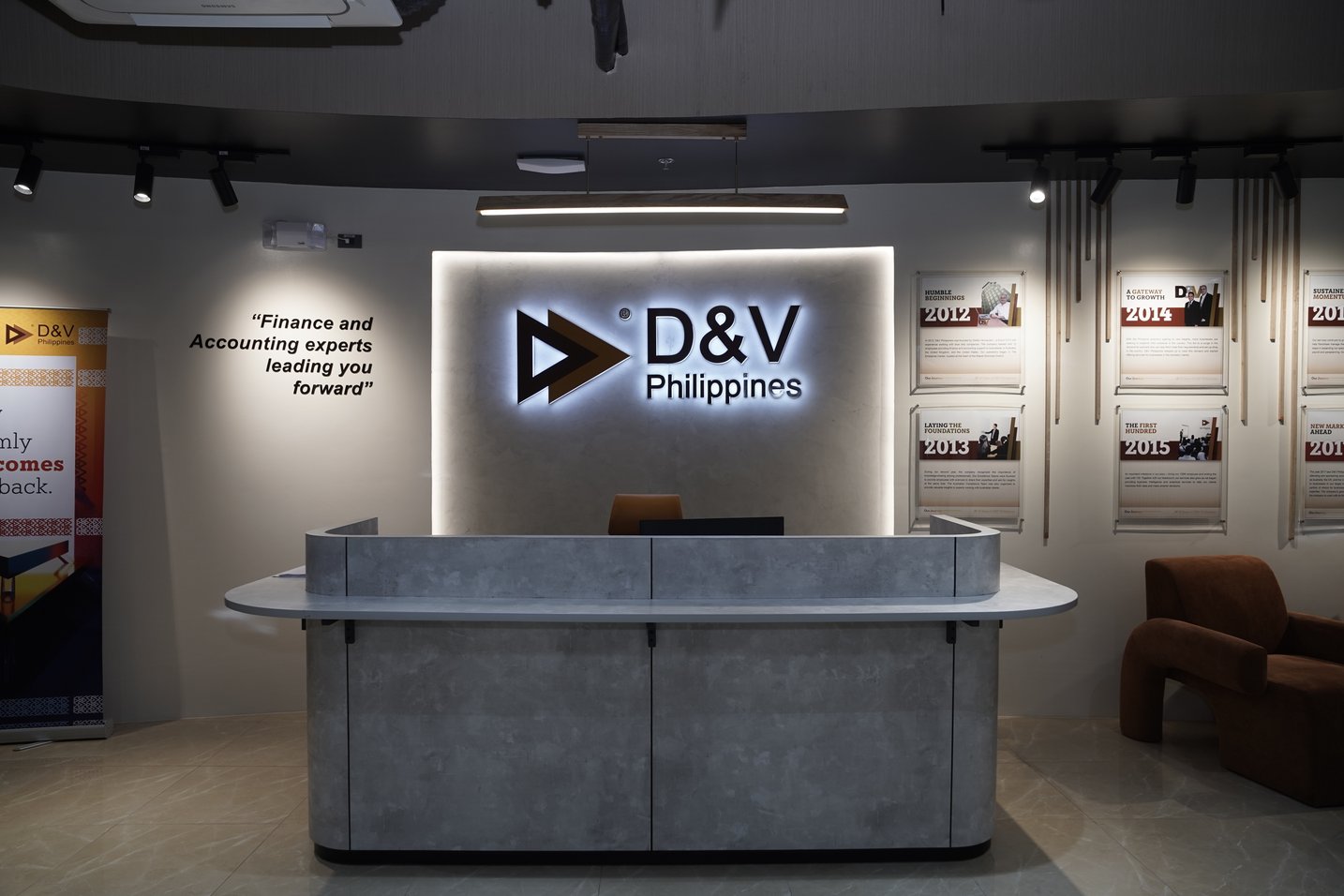
D&V Philippines as a Global Capability Partner
At D&V Philippines, our approach to finance and accounting outsourcing has continued to develop alongside the changing requirements of finance leaders.
While an engagement may begin with a need for additional accounting capacity, the long-term opportunity can extend further.
Our goal as a Global Capability Partner is to help clients build finance capabilities that complement their existing teams and evolve with their business requirements.
This includes developing professionals across different areas of finance and accounting while continuously strengthening their technical, communication, and technology skills.
D&V Philippines also maintains Excellence Teams focused on different accounting technologies and professional capabilities. These teams provide year-round learning and development opportunities that help our finance professionals strengthen the skills required by the clients they support.
This approach allows organizations to build teams according to their individual requirements rather than being restricted to a fixed delivery model.
As client needs evolve, support can progress from transactional accounting toward reporting, analytical and other specialized finance activities.
Technology is another part of this development. As automation and AI become more integrated into accounting workflows, our approach remains human-led and technology-enabled, using technology to complement the expertise and judgment of finance professionals.
The result is a model designed to provide more than an additional headcount. It creates access to a wider ecosystem of finance talent, technology knowledge, operational support, and continuous capability development.
With the right structure, people and technology in place, a Global Capability Partner can help create a finance function that is not only equipped to support today's operations but is also prepared to develop alongside the business.
Read Next: D&V Philippines' Shared Services Center
Ready to move your finance function forward with D&V Philippines?
Are you searching for a dependable outsourcing partner to help scale your operations? Look no further than D&V Philippines. With over a decade of expertise in providing top-tier finance, accounting, and audit support services to clients worldwide, you can be sure that we can be your trusted outsourcing partner. Schedule a free consultation with us today.
You can also download our Transforming Service Delivery: Inside a Successful Outsourcing Engagement case study and discover how our tailored accounting support solutions can help you handle the changing ESG demands in the industry.